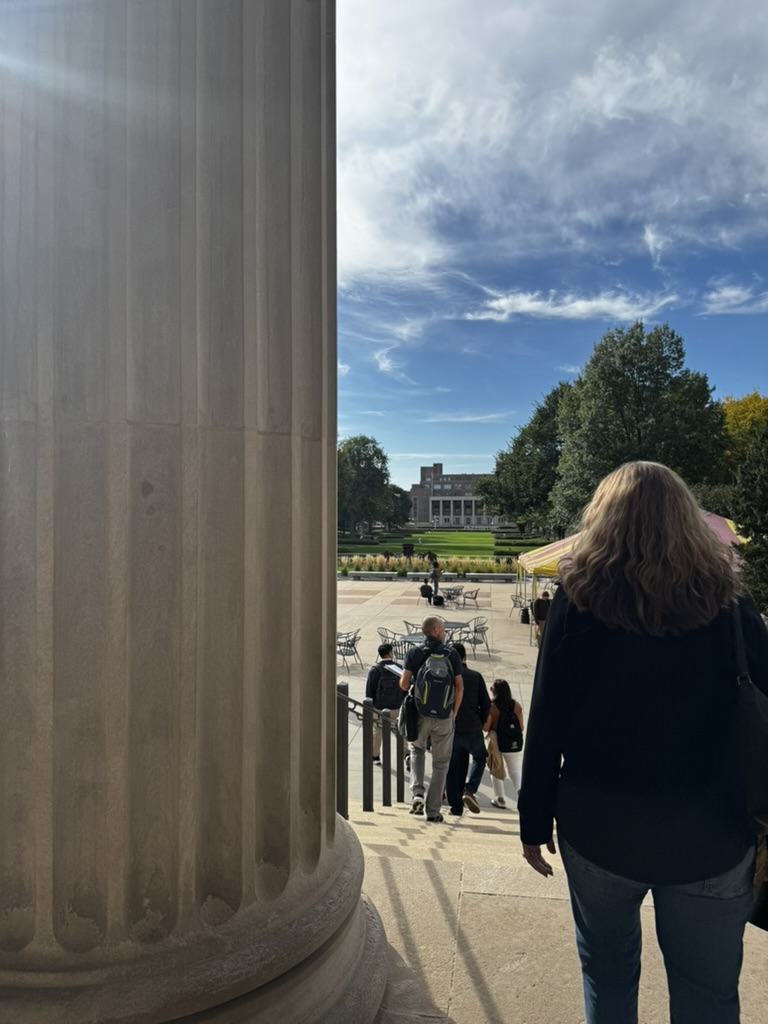
I'm Zelda Thomas, an independent college counselor in Minneapolis, and I'm visiting 50 colleges for you. This is number seven. I started with Minnesota because it's home. And this particular visit made me reconsider some of my own decisions as a parent.
My two older children attended private colleges. I spent a considerable amount of money on their educations, and I never seriously considered the University of Minnesota. I hadn't even properly toured it. After spending time exploring this extraordinary university, I wonder why not.
Right here in my backyard is a world-class research institution with beautiful historic buildings, cutting-edge facilities, exceptional academic programs, and access to one of the strongest business and medical communities in the Midwest.
I wish I had looked more closely.
“You may be surprised by what you've been overlooking.”
57,879
Total Students, Fall 2025
32,632
Undergraduates, Fall 2025
~50,000
Fall 2026 Freshman Applications
Takeaway One
An Ivy League Feel With Big Ten Energy
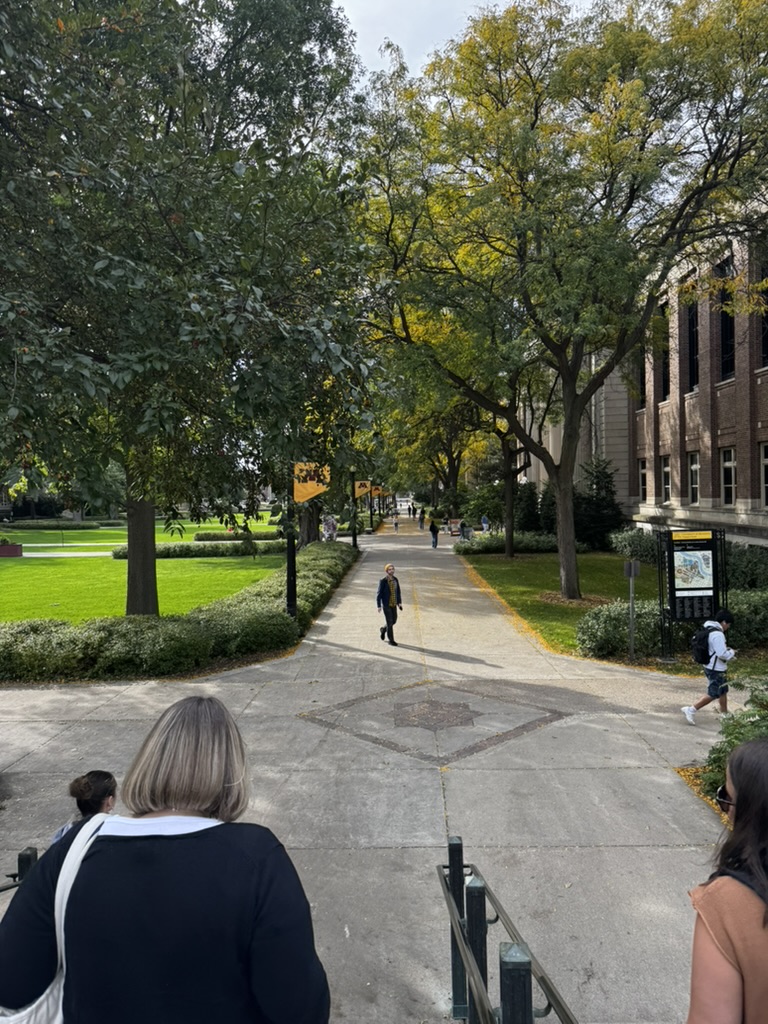
The historic buildings, grand libraries, and expansive green quads could belong to an Ivy League university. But beyond the architecture, this is a massive, modern research institution with remarkable facilities.
There are more than 300 majors and minors, an energetic student community, and 22 varsity sports teams. The campus is woven into Minneapolis itself, with restaurants, coffee shops, museums, and the METRO light rail running right through it.
And for anyone worried about Minnesota winters, eight miles of tunnels and skyways connect many campus buildings.
Takeaway Two
Serious Academics and Competitive Admissions

The University of Minnesota admits freshmen directly into one of eight colleges. That distinction matters because admission requirements and competitiveness vary significantly by program.
For fall 2026, approximately 50,000 students applied for a freshman class of around 7,200. The middle 50% of admitted students had unweighted GPAs between 3.51 and 3.96.
17:1
Student to Faculty Ratio
84%
Graduation Rate
3.51-3.96
Middle 50% Unweighted GPA
The Carlson School of Management is particularly impressive, tied for tenth among public undergraduate business programs nationally. An extraordinary 97.1% of its 2025 graduates received a job offer or secured another qualifying post-graduation opportunity within 90 days.
Engineering is another powerhouse. Among public graduate programs, chemical engineering ranks third, biomedical ninth.
Takeaway Three
An Extraordinary Place for Future Doctors and Researchers

This was one of the biggest surprises for me, although it shouldn't have been. I use the University of Minnesota's medical facilities myself.
The medical school, university hospitals, modern clinics, and sophisticated research facilities are an enormous asset. The university is home to the Masonic Cancer Center and major programs in medicine, biology, and biomedical research.
For a student interested in pre-med, biological sciences, or a research career, having this kind of medical and scientific infrastructure on and around campus is an exceptional advantage. Students should investigate the specific undergraduate research and clinical opportunities available to them.
Takeaway Four
Your Career Opportunities Are Right Here

Minnesota is home to an extraordinary concentration of major employers, including Target, 3M, General Mills, Best Buy, UnitedHealth Group, and U.S. Bancorp.
Add Mayo Clinic and privately held Cargill, and you have a remarkably strong regional economy.
For students interested in business, technology, health care, or engineering, these organizations represent an important network of potential internships, professional connections, and future employers.
My Take
Don't Overlook Your Own Backyard
Here's what this visit reminded me, both as a college counselor and a parent.
We have become so accustomed to sending our children across the country, often at enormous expense, that we sometimes overlook exceptional universities close to home.
A private university can cost $90,000 or more annually. For 2026-27, tuition and housing at the University of Minnesota Twin Cities run about $34,900 a year for Minnesota residents. Add books, transportation, and personal expenses and the total comes to about $38,200.
$34,864
2026-27 Minnesota Resident Tuition & Housing
$58,900
Out of State Tuition & Housing, 2026-27
$19,500
Median Debt at Graduation
Students from Wisconsin, North Dakota, and Manitoba may qualify for reciprocity rates, which are lower than out of state tuition. Students in Carlson and the College of Science and Engineering pay an additional $3,100 per year.
Of course, there are wonderful private colleges, generous merit scholarships, and financial aid packages that can make other options affordable. Every student deserves to find the right fit.
But families should compare the actual costs before assuming that farther away or more expensive means better.
There's also something to be said for sustainability. Visiting colleges closer to home means less travel, fewer flights, and an opportunity to explore excellent institutions in our own communities.
And most importantly, parents shouldn't feel compelled to jeopardize their financial futures to provide an exceptional education for their children.
My advice? Before booking another cross-country college tour, visit the universities within driving distance of your home. Walk the campus. Explore the academic departments. Talk to students. Look at the facilities.
You may be surprised by what you've been overlooking.
I certainly was.
Wondering if the University of Minnesota belongs on your student's list?
Request a ConsultationQuick Answers
- What is the University of Minnesota acceptance rate?
- Sources put it somewhere in the 70s percent, but the real answer depends on the program. Freshmen are admitted directly into one of eight undergraduate colleges, and engineering, nursing, and business are more selective than the university-wide average, so check the requirements for the specific college your student is applying to.
- How many students attend the University of Minnesota?
- 57,879 total students in fall 2025, including 32,632 undergraduates.
- What is the University of Minnesota known for?
- World-class research, the Carlson School of Management (tied for tenth among public undergraduate business programs), top-ranked engineering departments, and one of the strongest medical and scientific research environments in the Midwest.
- How much is tuition at the University of Minnesota?
- For 2026-27, Minnesota residents pay $19,312 in tuition and fees plus $15,552 for housing and food, so tuition and housing together come to about $34,864. Add books, transportation, and personal expenses and the university's total cost of attendance is about $38,226.
- Is the University of Minnesota a good school?
- Yes. It is a world-class research university with top-ranked engineering, business, and medical programs, an 84% graduation rate, and a 17:1 student-to-faculty ratio, all at a public-university price for Minnesota residents.
- Where is the University of Minnesota located?
- The Twin Cities campus sits in Minneapolis, with the St. Paul campus a few miles east, connected by a free shuttle. The Mississippi River runs through the middle of the Minneapolis campus.