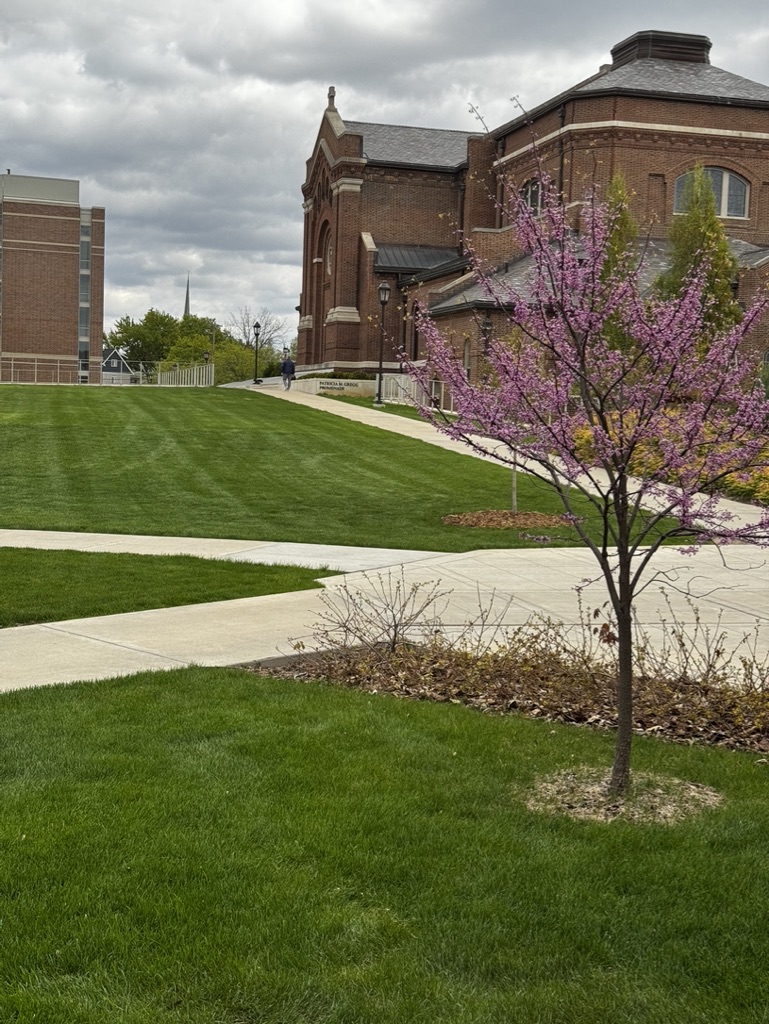
My mission is simple: I visit colleges across the country and give families my honest, unfiltered, boots-on-the-ground take. Not the brochure version. Not the tour guide script. What it actually feels like to be on that campus, talk to those students, and walk those halls. This is visit number three in my 50 Colleges series, and St. Thomas is one I want every family to hear about.
I drove across the river to St. Paul on a bright Minnesota morning, and I want to be straight with you. St. Thomas carries a reputation in some circles as the safe, local option. What I found is something more interesting than that label suggests. This is a school where students clearly like being. They are engaged, committed to their degrees, and happy in a way that reads as real. That matters more than people realize when choosing a college.
Let me give you my honest assessment.
~6,300
Undergrads
13:1
Student-Faculty Ratio
Division I
Athletics (Since 2021)
Faith & Architecture
Beauty as a Form of Devotion
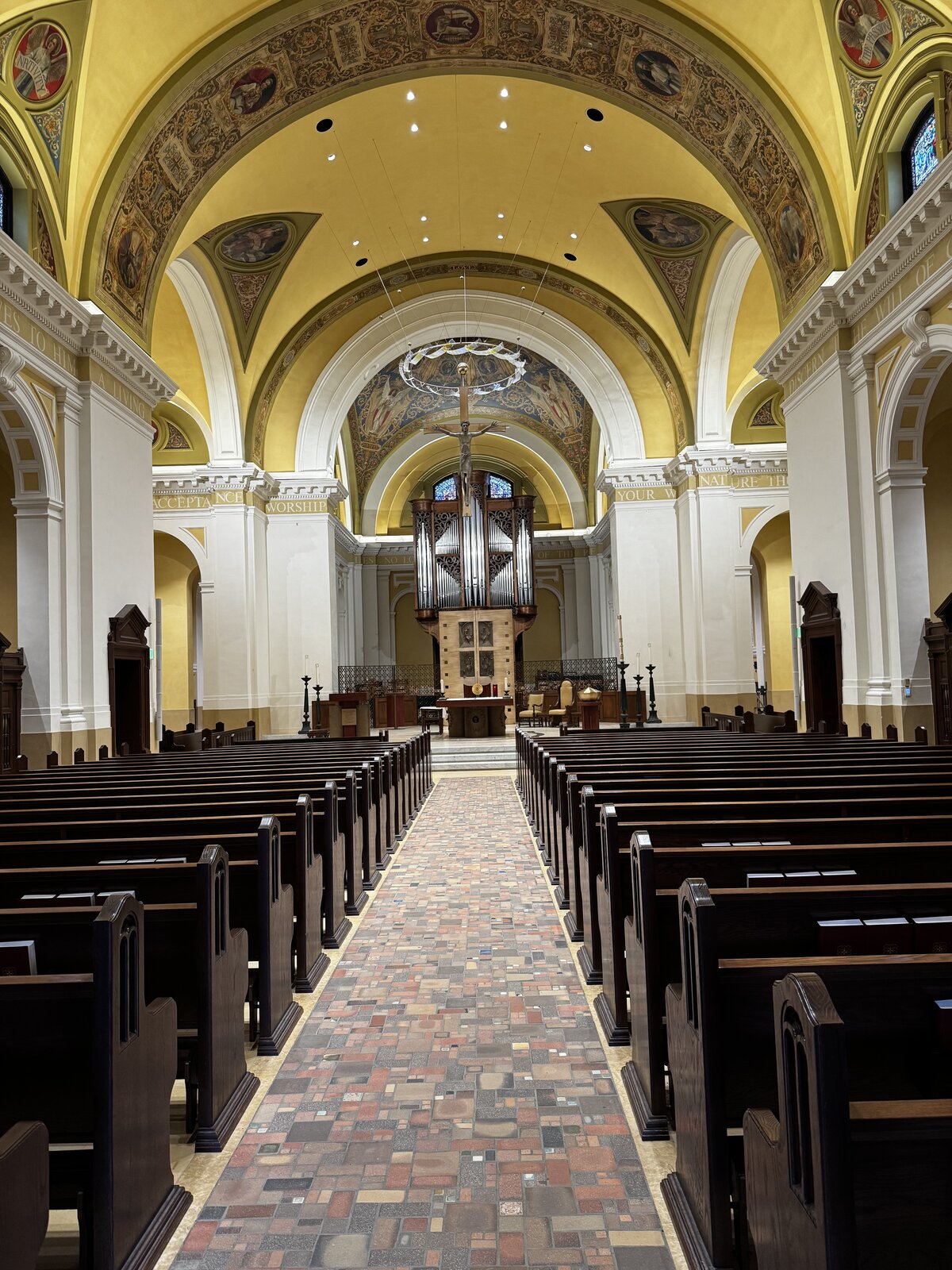
The Catholic identity at St. Thomas does not announce itself in any heavy-handed way. It lives in the architecture. The Chapel of St. Thomas Aquinas, completed in 1919, was designed by Emmanuel Masqueray, the same architect behind the Cathedral of St. Paul. The seminary buildings on the south campus are the early work of Cass Gilbert, who went on to design the Minnesota State Capitol. You walk through this campus and you feel the weight of that intention, beauty as a form of devotion, without anyone delivering a sermon about it. For families who want a values-grounded education that does not feel preachy or prescriptive, that distinction matters enormously.
The Campus
A Serious Place That Does Not Take Itself Too Seriously
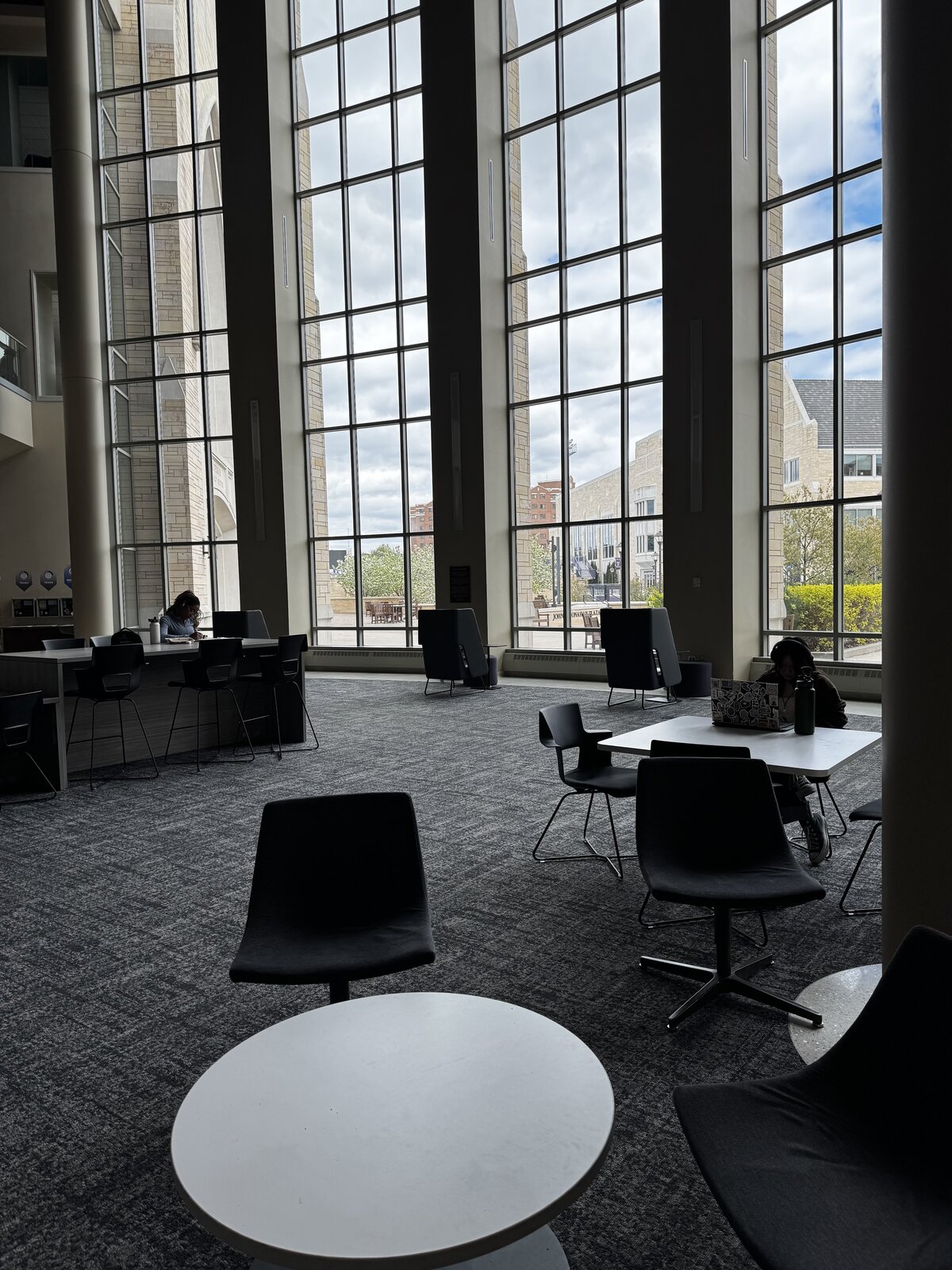
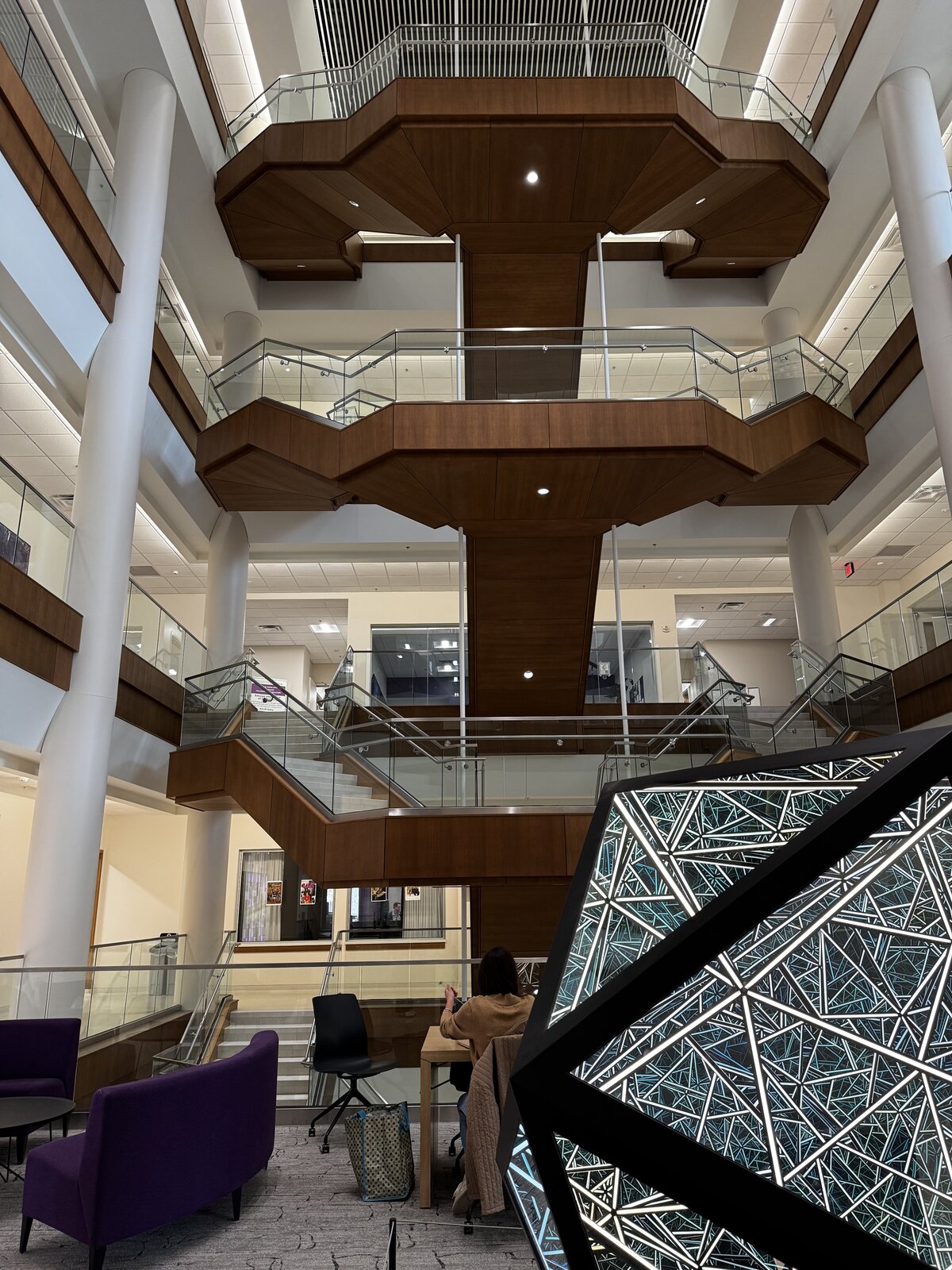
The campus sits in the Summit Hill neighborhood of St. Paul, which is one of the most architecturally beautiful stretches of street in the entire Midwest. Summit Avenue's Victorian mansions run right alongside the university, and there is a quiet confidence to the physical environment that I noticed immediately. This is not a campus designed to impress you during a visit and then disappear. The buildings are built to last. The green spaces are generous. Students were outside, moving between classes, eating lunch on the Anderson Student Center steps. It felt alive.
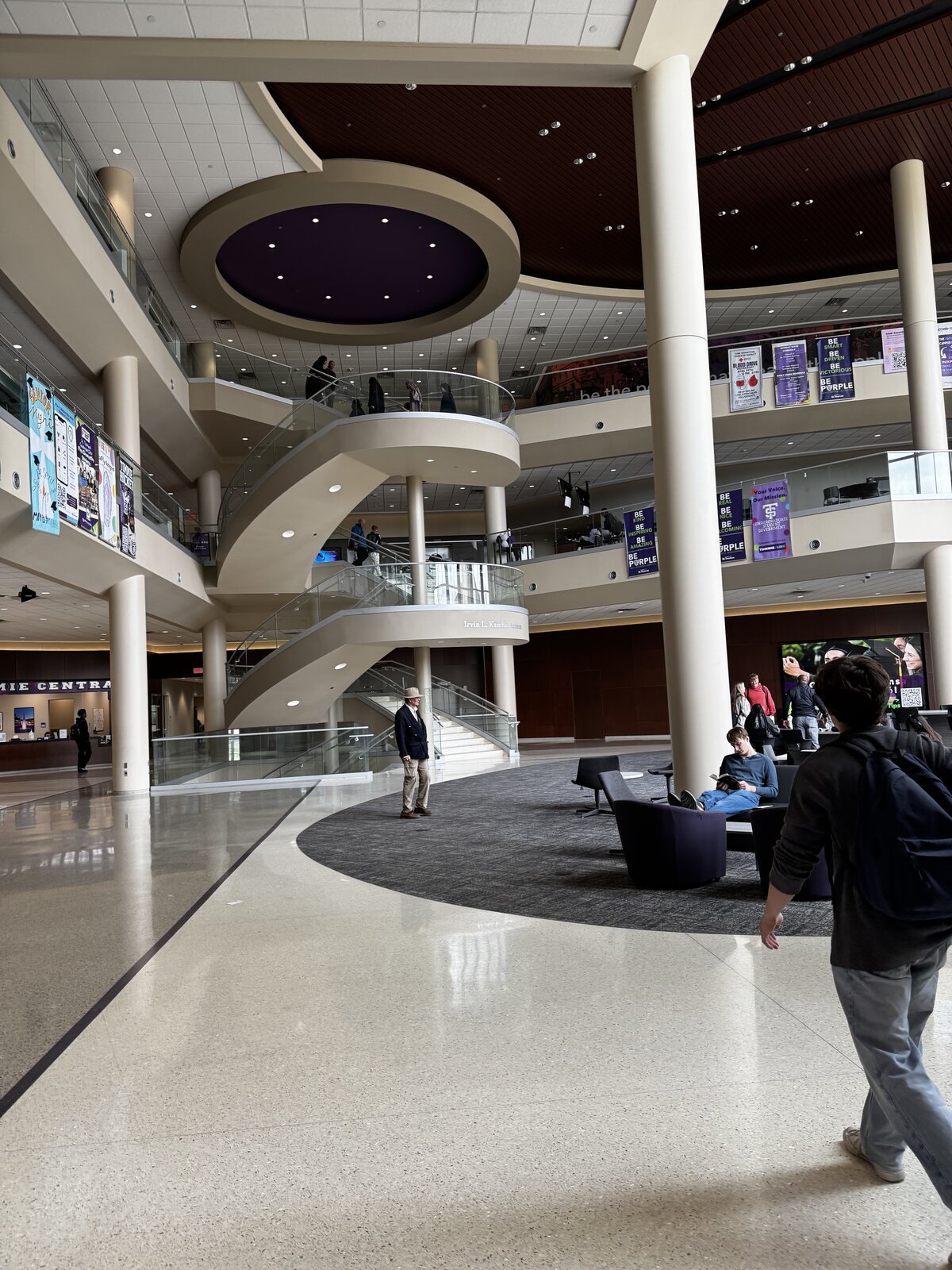
The Anderson Student Center deserves its own paragraph. It is one of the better student centers I have visited anywhere. Multiple floors, a bowling alley, dining options that go well beyond the average dining hall, and an energy that felt clearly student-driven rather than administratively curated. I lingered there longer than I planned.
“The students I spoke with were not recruiting me. They were just telling me they liked it here. That is the kind of candor I always listen for on a campus visit.”
Academics
The Opus College of Business Is the Real Story
If your student has any interest in business, finance, entrepreneurship, or management, they need to know about the Opus College of Business. It is consistently ranked among the top business programs in the Midwest, and its alumni network within the Twin Cities business community is exceptional. I mean that in a practical, jobs-get-filled way: companies in Minneapolis and St. Paul actively recruit from Tommie business programs because they have decades of experience with the quality of graduates coming out.
But here is what I want families outside the business track to hear: St. Thomas has a genuine liberal arts core. Every student, regardless of major, engages with philosophy, theology, ethics, and writing. For families raising curious, values-driven kids who are not yet sure what they want to study, that foundation matters. I have counseled students who chose a business-forward school thinking they were locked in and found that flexibility within the curriculum far exceeded their expectations. St. Thomas tends to produce graduates who can think and communicate, not just execute.
The engineering and computer science programs are growing and worth watching, particularly given the university's recent investment in STEM facilities. Health sciences, education, and pre-law pipelines are also strong, and with the St. Thomas School of Law on campus, students interested in that path have a clear and supported route.
Programs worth highlighting for the Class of 2027
Opus College of Business
Finance, Accounting, Entrepreneurship, Marketing; outstanding regional employer relationships.
School of Engineering
Growing programs, strong industry project components, smaller cohorts than large state schools.
Pre-Law Pathway
On-campus law school access, moot court opportunities, strong placement history.
Education
One of the most respected teacher preparation programs in Minnesota.
Health & Human Services
Social work, public health, and kinesiology with strong community field placements.
Location
St. Paul Has Its Own Energy. And It Is Worth Your Attention.
Some families frame the St. Paul location as a question mark. I see it differently. The Grand Avenue corridor, which is steps from campus, is one of the most charming urban commercial strips in the country. Independent restaurants, bookstores, coffee shops, boutiques. Students told me they walk to Grand Avenue constantly. It does not feel like a college town tacked onto a city. It feels like a real neighborhood where students happen to live, and where they actually put down roots.
And Minneapolis is twenty minutes away. The light rail connects the two cities. Students who want the larger urban experience have it. Students who want the quieter, more walkable neighborhood feel have that too. For families worried about their student getting swallowed by a big anonymous city, St. Paul's particular energy is very much worth considering.
Athletics
The D1 Transition Has Changed the Energy on Campus
St. Thomas made the jump from Division III to Division I in 2021, and the shift has been noticeable in ways both athletic and cultural. Football competes in the Pioneer Football League, basketball and most other sports in the Summit League, and hockey is on its way to the National Collegiate Hockey Conference. There is a new electricity around game days, a sharper school identity, and a recruitment pipeline that is bringing in student athletes who are choosing St. Thomas over schools they might have previously looked past. For families with student athletes, this is a meaningful development.
For non-athlete students, the D1 move has added a layer of school spirit that smaller Division III institutions sometimes struggle to build. That matters for four-year quality of life more than people admit.
Who Belongs Here
The St. Thomas Student I Would Send There
A student who is community-minded and wants to be actually connected to their campus, not just passing through it. A student interested in business, law, health sciences, or education who wants rigorous preparation without the impersonal scale of a large research university. A student athlete navigating the new D1 landscape who wants real playing time alongside a strong academic reputation. A student whose family is weighing debt load carefully and wants to maximize merit aid at a school with strong regional employer relationships. And honestly, any student who has visited a large state school and thought: I want something more human than this.
Here's my take
What stood out to me most at St. Thomas was the happiness of the students. Not the staged enthusiasm of a campus tour. The real kind, the kind where someone just tells you they like it there, unprompted. Students here are engaged with their coursework, connected to their community, and committed to their degrees. That culture of investment is something you cannot manufacture, and it is one of the best signals I look for on any visit.
Yes, some students come here because it feels like a safe and familiar choice. What they find is a place where they grow into themselves, often faster than they expected. That is not a small thing. A college that helps a young person thrive, feel known, and build real skills is doing exactly what it should.
For families weighing cost, the value calculation is hard to ignore. Merit scholarships at St. Thomas are generous, and the total cost of attendance for a student who earns an academic award can be remarkably competitive with flagship state school tuition. Run those numbers before you assume anything.
I left St. Thomas with more enthusiasm than I arrived with, and I want that sentence to mean something to you. I do not manufacture enthusiasm. The campus visit confirmed what the data suggest: this is a school delivering more than its reputation currently captures. That gap tends to close over time. Families paying attention right now are ahead of that curve.
Quick Answers
- What is St. Thomas's acceptance rate?
- About 85%.
- Is the University of St. Thomas a good school?
- Yes. It is delivering more than its reputation currently captures, with a genuine liberal arts core and generous merit scholarships.
- What is St. Thomas known for?
- The Opus College of Business, its move to Division I athletics in 2021, and a campus on Summit Avenue in St. Paul.